
LOCATION, LOCATION…
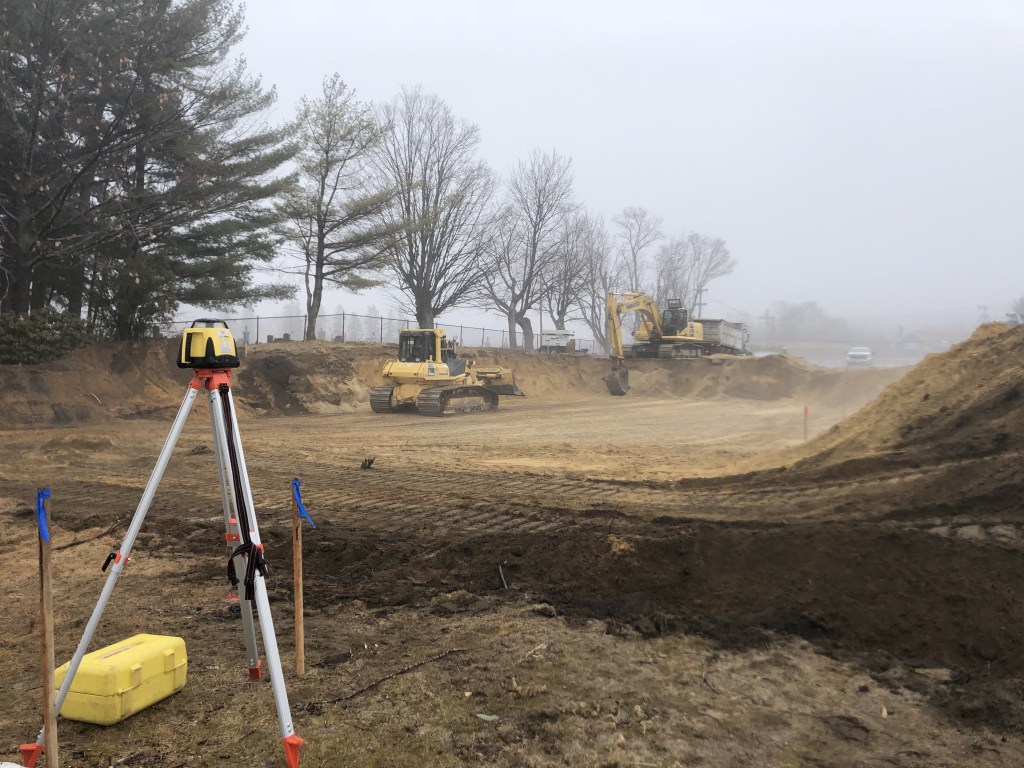
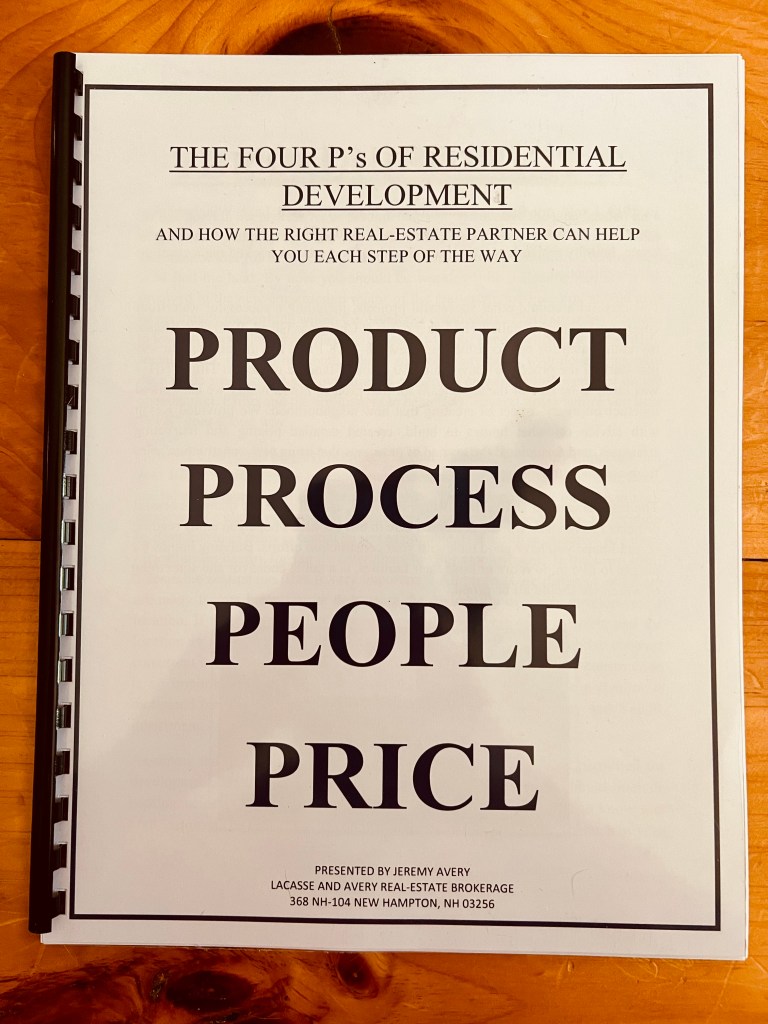
When Kevin Lacasse and I decided to combine our decades of experience and start a new residential brokerage, we knew that our focus would be on new construction projects. Kevin was, and still is, one of New Hampshire’s most successful developers, and I was coming off a 7-year run of being a lead agent on several high-profile and profitable residential projects. One of the first steps that I took was to put together a hand-book of sorts, a guide to developing residential property geared to the first-time developer. Shamelessly, I stole an idea from a television show that I enjoy called “The Profit,” and called this handbook “The 4 Ps of Residential Development… Product, Process, People, and Price”
In today’s blog I want to focus on one aspect of development that we examine in detail in the handbook. That aspect is location. One of the tired cliches of real-estate is “location, location, location,” but like most cliches there is an awful lot of truth in that simple phrase. To be blunt, you can build the nicest houses the world has ever seen, but if they are in the wrong place, you will fail.
So what makes a good location for a residential construction project? There are many things to consider and none of them should be considered the “most important” because unless each and every box is checked, you are only asking for trouble.
The Market
The first consideration is what is the state of the real-estate market in the specific location you are looking at? It is important to look into this with great detail, because in New Hampshire, zip codes are important. One town can be a hotspot of real-estate activity while the next town over can be a virtual dead zone. Why? There can be many reasons, such as schools, taxes, crime, civic reputation, etc. Ask your Realtor partner to do a comprehensive search of what has sold in that town, what is available for inventory, and how long these homes have been on the market. What you are looking for is the suitability of your product for that market. If homes are selling in that municipality are homes that you can build, and they are being sold for prices that can justify the costs of development and construction, then consider this box checked. Conversely, if the homes that you are considering building are already sitting stagnant on the market then you should move on. Familiarizing yourself with construction activity in this manner will also allow you to learn of any similar projects that might be further along than yours, potentially making your efforts obsolete before you even begin.
Now, just to confuse things, there is another way to look at this. If the market has not shown activity with the homes that you build, ask yourself “why?” Is it possible that no one has put anything on the market like you are able to build? We call this “creating your own demand,” and it can be an extremely lucrative way of looking at the process.
Zoning
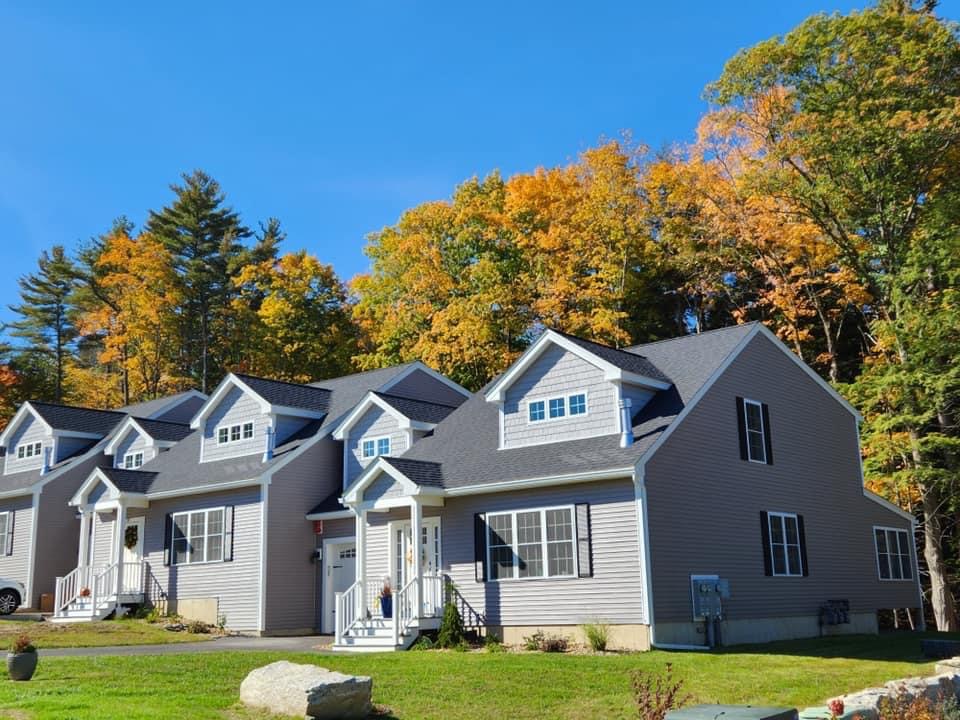
One of the first questions you will ask is “what can I build and how many?” To a large degree, this question will be answered by a deep dive into the zoning ordinance of the town you are considering. You will want to know the basics, such as minimum lot sizes, minimum road frontage requirements, and whether cluster or open-space development is allowed. However, there are more minute details that have to be considered and can be found in the zoning ordinance. For example, does the town take into consideration the buildability of a lot for the purposes of lot size? What this means is that if your property is wet or steeply sloped, this area might be subtracted from what you would otherwise consider a lot, and a 3-acre minimum might actually be much more in practice, thereby turning a 10 lot subdivision into a 7 or 8 lot neighborhood very quickly, and subsequently driving up the per lot cost substantially. Other issues that might come up in a search of the zoning ordinance is the minimum sight lines that the town insists on for driveway permits, again potentially turning a large and profitable project into a smaller and unsuccessful one.
The shape of the lot and the frontage along the road is just as important as the density and minimum lot size requirements. With the cost of road construction being so high, many builders will only look for land that is sub-dividable along the existing town road.
Let’s take a look at the map below. It is of a 14 acre parcel being offered for sale in Belmont. The zoning allows for 3 acre lots, however there is only 555 feet of frontage on the road. A road into the property obviously makes no sense, so the deciding factor on how many lots you can get here is the frontage. Belmont allows for 180 feet of frontage as a minimum, and you will see that there is 550 or so along the road, so we are looking at 3 “frontage lots” for this property. This is unless there are disqualifying factors that could come up in due diligence such as slope or wetland.
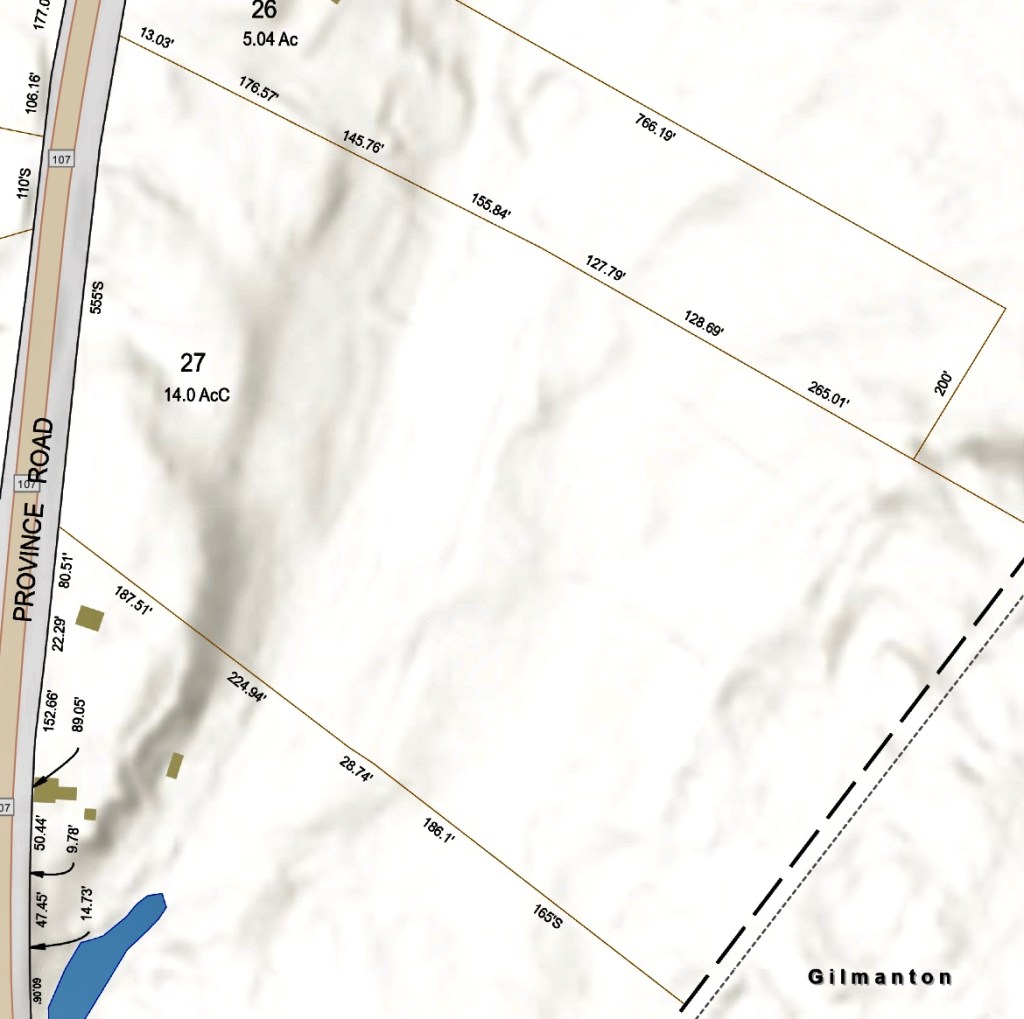
This would create 3 long narrow lots. Some towns do not allow that, but it should not be an issue here.
This seems like a good time to remind you that all of these zoning issues, and many other considerations to come, are a major reason to have your Realtor partner draw up a purchase and sales contract that protects you. You should be able to conduct all due diligence including surveying, engineering, soil testing, and permitting for driveways, septics, and home construction prior to closing on your chosen land.
Deed Restrictions
What appears to be an empty field surrounded by forests can instead be a minefield of potential obstacles if previous owners have put restrictions on the future use of the property. This can take the form of conservation easements on the property or utility easements for potential powerlines or other social infrastructure. This is also an issue of the land is a cancelled project or is part of a larger subdivision previously partially developed. This can impact the type of house, or size, or limit construction activity. Usually these details are presented by the seller or their agent clearly and with transparency but that is not always the case, another reason to have a purchase and sales contract that allows for due diligence.
Utilities
This is a major consideration and often will be the deciding factor on whether to pursue a particular project. Whether the property in question has town water and/or sewer available is a big factor not just in the cost of construction but in the desirability of the homes once they are built. The cost of putting in a well and an entire sewer disposal system for each home being constructed can easily add $40,000 or more to their construction cost. Is that a cost that can be absorbed by the sale? Perhaps, but keep in mind that many of our buyers are coming from metro areas to our south and they have never owned a home with a private septic system and the thought of taking care of that is more intimidating than we might think. It can be a real turn-off for those buyers that are looking for a new home. In addition, many of our other buyers are down-sizing form older homes where they may have had to deal with failing septic systems or replaced well pumps. This is what they are now trying to avoid.
Another consideration is that many towns provide for higher densities in locations serviced by their water and sewer, even within the same zoning districts.
Now, to be sure, there are costs associated with municipal sewer and water. This is especially true if you are putting in a road and have to “tie-in” what is basically your own system into that of the town. But these costs are less, and the convenience and desirability of homes with municipal utilities are greater, so overall this is something to look for.
Topography
This is an important consideration when you are thinking about the placement of homes on specific lots. Obviously you want a nice level lot but many homes are built today with a finished basement envisioned, and that is made much more attractive and valuable if it includes a walkout. This can be accomplished even in an adverse setting but it is obviously easier if the slope is accomodating. Also you want to think about water management, and how it will be accomplished when the home is built and being lived in. Is the lot sloped too much toward the home? Will water from one lot ultimately end up in their neighbors yard? In many towns all these questions have to be answered before permits will be issued, and the resulting directives from the town for such thing as retention ponds, swales, and culverts can be very costly.
The orientation of the individual homes is something to be considered. Generally homes in New Hampshire are more desirable if they are facing south in order to provide as much sun as possible. However, a western exposure that allows for great sunsets or views to the east showing a glorious sunrise are also desirable. Truthfully, the marketing of these individual characteristics is a job for your realtor and they should not be the deciding factor in whether to build or not.
This is New Hampshire, and the presence of granite is to be expected. However, there are rocks, and then there is ledge. That word is an epithet in the world of construction, but the truth is that an experienced home builder can work with most rocky situations.
Soil types are another consideration. Your surveyor or engineer will be able to give you an idea of what to expect during construction. This impacts septic systems, future erosion, even the structural integrity of the house itself. It can even contribute to construction costs by increasing the amount of material needed to be brought in, or taken out, of the site
Again, you will want to make sure that you are allowed to dig test pits for future septic systems as part of your due diligence. Make sure that this is allowed in your contract, and make sure you are given the time to get it done.
While not technically topography, whether the lot is wooded or not is an important consideration. Removing trees from a large lot for the purposes of subdividing can be a costly process, so a large open area or field might seem more desirable. However, individual house lots that can be separated by a row of trees or otherwise made more private can be much more valuable. It is a give and take but in my experience a large lot with trees that can be selectively harvested is truly a gift from Mother Nature.
Location
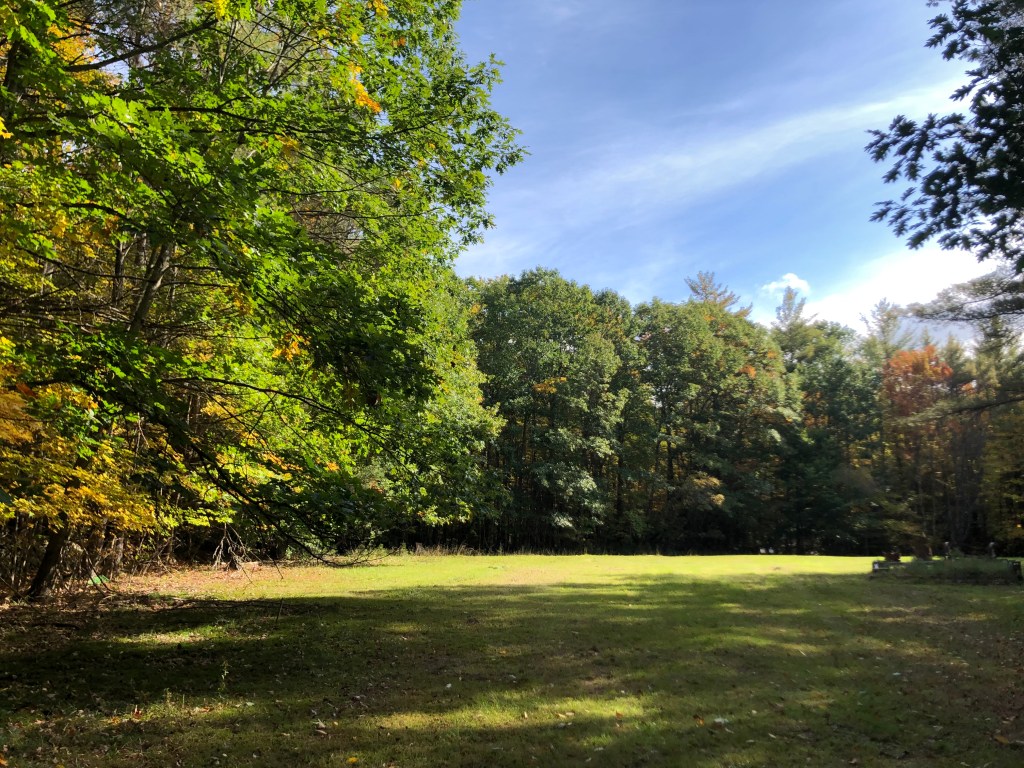
Specifically, here we are talking about the location of your new project in regards to job centers, travel infrastructure, amenities etc. The primary considerations are going to depend on what type of project you are considering. If this is to be a neighborhood of primary home-owners, families and other full time residents, then you will want to make sure that you are in an area with good schools and that those schools are near-by. You will also want to know that there are local employment opportunities, as well as libraries, parks, and other amenities geared toward that demographic. If your target buyers are second home owners then you will want to make sure that your project is located near the travel corridors that can take them from their most likely primary homes to their new home that you have sold them. That basically boils down to “how close is the highway and will I have to fight the local traffic to get there.” Other considerations for second-home buyers is the closeness of area amenities, such as lakes and beaches, skiing, entertainment facilities, and shopping/dining.
A rather over-arching concern in the consideration of location is the reputation of the town itself. If the locale is considered undesirable by the area residents then it will make your sell-off more difficult and a lengthier process. However, keep in mind that we are mostly selling to people moving in from out of state, so if those concerns are based more in past biases than in reality you should be fine. And this is especially true if you are building an entire community, which will have its own cache and high level of desirability.
You will also want to investigate the future planned development for that area. Word travels fast and undesirable construction in the immediate vicinity can kill a residential project. This is true whether it occurs before, during, or even after the build-out of your project. Buyers will know, and truthfully you should disclose, if there is a bio-mass plant going in up the street or if other negative activity is planned.

Just do it!
It’s easy for a broker to say, after all it’s not our money, but something I find myself telling our builder clients these days is that paralysis by analysis is a real problem in today’s real-estate world. The truth is, this seller’s market is not going anywhere. It has survived a tripling of the interest rates, a global mash-up of war, high energy prices, and political upheaval. We simply don’t have the available inventory for all of the qualified buyers looking to make New Hampshire their home. And that story wont change any time soon, no matter what the world throws at us. In fact, one lesson we learned during Covid is that in times of upheaval and uncertainty, New Hampshire is even more desirable. We are fortunate to live here, and we are proud to welcome more new neighbors to our beautiful state.
Jeremy Avery is a Co-Founder and the Principal Broker at Lacasse & Avery Real Estate Brokerage. He has successfully led several high-profile residential development projects and is pleased to offer that service to builders throughout the state. He can be reached via the email above or at 603-481-2657.

 Jeremy Avery's NH Real Estate Blog
Leave a comment